ServicesEquipment Installation
Loading Dock Equipment Installation in Weatherly
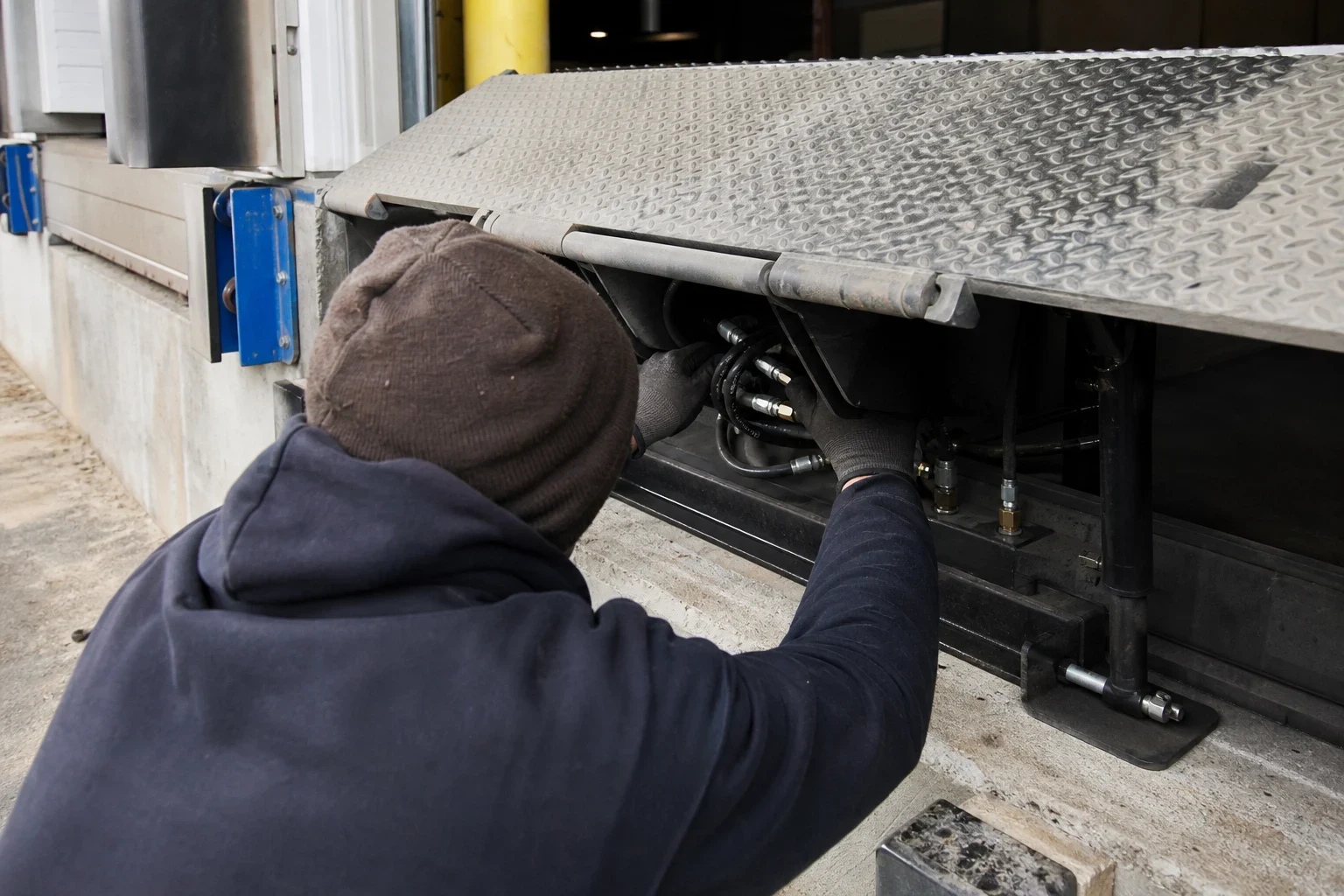
We install dock levelers, vehicle restraints and dock doors after measuring the pit, checking the concrete and watching the trailers you actually receive. The equipment arrives sized for your dock, goes in on a schedule built around your shipping, and is handed over working.
New equipment that matches the dock it goes into
Most installation trouble starts before the crew arrives. A leveler ordered by catalog size can sit high in an old pit, a restraint can miss the rear impact guard on lowboy trailers, and a door can be specified without room for the track. We start with a site survey so the equipment is chosen for your building, your trailers and your traffic.
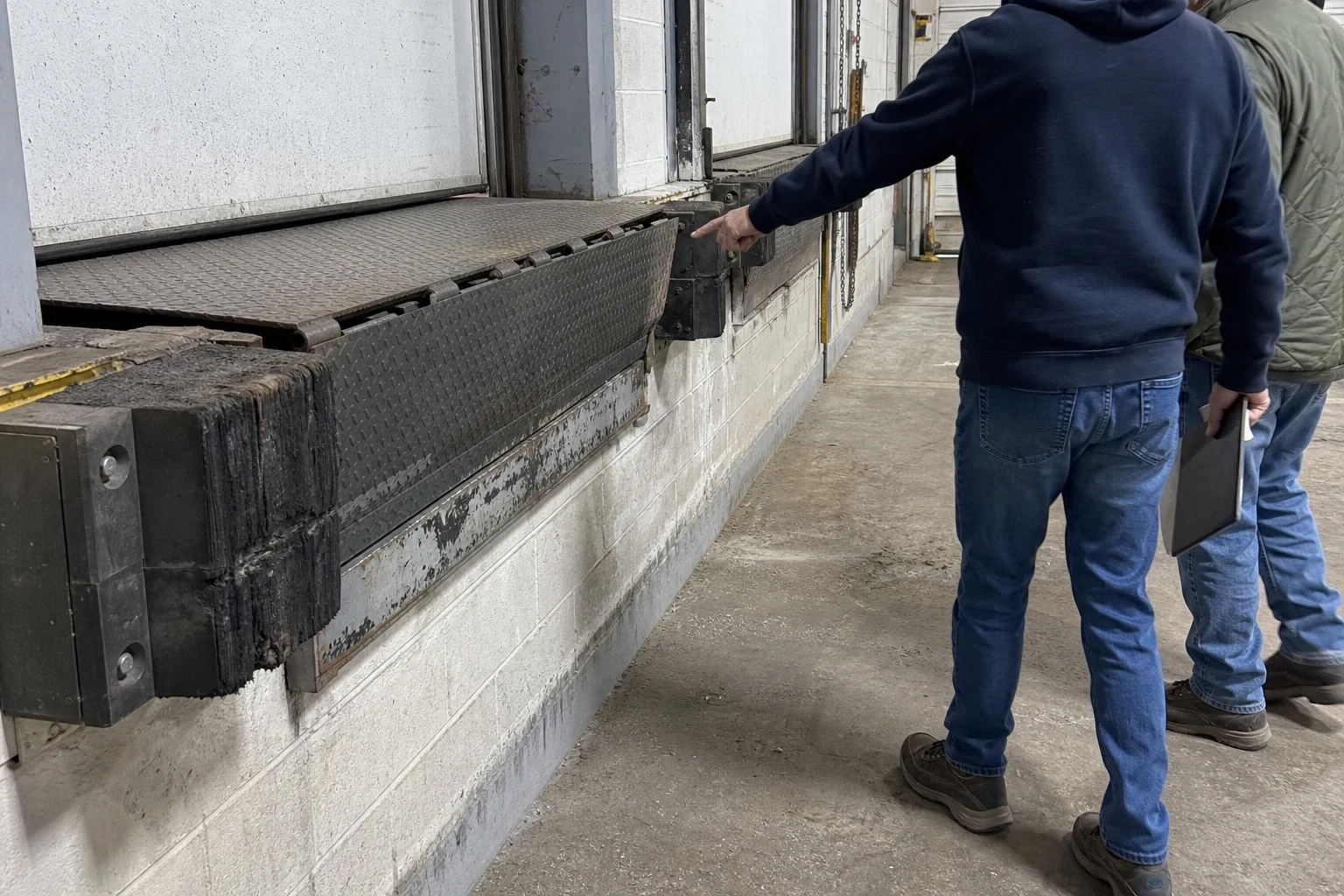
That survey covers pit depth and squareness, curb angle condition, the concrete around the anchor points, available power, and the range of trailer bed heights your drivers back in. If something in the existing dock needs repair before new equipment can go in, we tell you plainly and show you why.
We install for warehouses, distribution centers, manufacturers and stores with receiving docks across Weatherly and nearby towns such as Hazleton, Lehighton and Jim Thorpe.
What an installation covers
- 01
Dock leveler installation
Pit-style hydraulic and mechanical levelers, plus edge-of-dock units where a pit is not practical. We set the frame level, weld it to the curb angle and confirm the lip extends fully onto the trailer bed.
- 02
Vehicle restraint installation
Wall-mounted and in-ground restraints anchored to sound concrete, with inside and outside light communication so drivers and dock staff know when a trailer is secured.
- 03
Overhead and high speed doors
Sectional overhead doors, high speed doors and rolling grilles fitted to the opening, with tracks, springs and seals adjusted so the door closes tight against the sill. Cold air and wind-driven snow stay out in winter.
- 04
Electrical and interlocks
Control panels wired and, where you want it, interlocked so the leveler cannot operate until the restraint engages or the door is open. This sequence prevents a common cause of dock accidents.
- 05
Removal of old equipment
We cut out and haul away the old leveler, restraint or door, and repair the curb angle or pit edges when they are damaged.
- 06
Commissioning and walkthrough
Every unit is cycled under load before we leave, and we show your staff the controls, the daily check and what a fault light means.
Questions about Equipment Installation?
Call(570) 989-8869When installation is the right call
Repairs keep coming back
If the same leveler has had hydraulic, lip or hinge work several times in a year, the frame or pit may be the real problem. Replacing parts will not fix that.
Trailers no longer match the dock
New carriers, refrigerated units or air-ride trailers can sit outside your leveler's working range. Steep transitions slow forklifts and wear the equipment.
You are adding or opening doors
An expansion, a new receiving area or a reopened position needs equipment specified as a set, so the leveler, restraint and door work together.
No trailer restraint at a busy door
Wheel chocks depend on a driver remembering them. A vehicle restraint gives a visible, consistent lock against trailer creep and early departure.
Energy loss around the opening
Gaps at the leveler sides and a worn door seal let heat out all winter. New equipment fitted properly can close most of that gap.
How we handle an installation
- 1
Site survey
We measure the pit and opening, check the concrete and curb angle, note power, and ask about the trailers and loads you handle. This is where we find the details that decide whether the equipment fits.
- 2
Written estimate and equipment plan
You get a line-item estimate covering equipment, any concrete or electrical work, and removal of old units. If a permit applies, we explain it and pull it.
- 3
Scheduling around your shipping
We set the date with your receiving manager and install one position at a time where possible, so the rest of the dock keeps moving and downtime stays limited.
- 4
Installation day
The work area is locked out and barricaded, old equipment comes out, and new units are anchored, welded and wired. We keep the floor clear for your forklifts outside the barricade.
- 5
Testing, handover and cleanup
We cycle each unit with a trailer at the door, walk your staff through the controls, and leave the dock swept and ready for the next load.
What moves the cost of an installation
Installation pricing depends more on the dock than on the equipment brochure. We price after the survey so the estimate reflects what is really there. If the pit or concrete needs work, you see that as its own line, not as a surprise halfway through the job.
- Equipment type and capacity
- Hydraulic levelers, higher load ratings and in-ground restraints cost more than mechanical or edge-of-dock options. We match capacity to your heaviest loaded forklift, not the largest unit available.
- Pit and concrete condition
- Cracked pit walls, a bent curb angle or crumbling anchor points have to be repaired before anything bolts in. Freeze-thaw cycles and road salt often leave this damage.
- Electrical work
- A new circuit, a relocated control panel or interlock wiring between restraint, leveler and door adds labor and materials.
- Number of positions and timing
- Several doors done in one visit share setup time. Night or weekend work to protect shipping hours changes the labor cost.
Installation questions we hear
Will a new leveler fit our existing pit?
Often it will, but we confirm it by measuring. Older pits are not always square or the depth a current leveler expects. When the pit is off, we explain the options, from a pit kit or curb angle repair to a different leveler style, before you order anything.
How long will a dock door be out of service?
A leveler replacement in a sound pit typically takes a working day per position, and a wall-mounted restraint less. Concrete repair adds curing time. We give you the expected downtime for each door in the estimate so receiving can plan around it.
Can you interlock the restraint, leveler and door?
Yes. We can wire them so the leveler will not operate until the trailer is secured, and so the door must be open first. It is one of the most useful safety upgrades for a busy dock.
Can you install equipment we already purchased?
Yes, once we have checked it against the survey measurements. If the unit suits your pit, power and trailers, we put it in. If it does not, we explain the mismatch before any work starts. Still choosing a unit? We also handle loading dock equipment sales and can recommend models sized from those same measurements.
What happens to our old equipment?
We remove it, haul it away and repair the mounting area so the new unit starts on a sound base.
How do we keep new equipment working well?
Regular inspection and adjustment matter most in the first year, when anchors settle and seals bed in. Our Loading Dock Preventative Maintenance service covers that on a schedule that fits your facility.
Start with a survey of your dock
Tell us which doors you are planning for and what trailers you receive. We will arrange a visit, measure everything that affects the fit, and give you a clear written estimate.