ServicesPreventative Maintenance
Loading Dock Preventative Maintenance in Weatherly
We inspect, adjust and lubricate your dock levelers, overhead doors, vehicle restraints and seals on a set schedule. When something is wearing, we trace it to the cause and tell you plainly what it means before it stops a shipment.
Small wear, caught early
Most dock failures give warning long before they shut a door. A hydraulic leveler starts to drift down a little. A torsion spring loses tension and the operator works harder. A restraint hook stops seating fully on rear impact guards. None of these stops the shift on day one, but each one ends in downtime if it is left alone.
Our preventative maintenance visits are built around finding those early signs and understanding them. A slow leveler might be low fluid, a tired seal or a pinched hose, and each calls for a different fix. We check before we recommend, so you are not paying for parts that would not have solved the problem.
Freeze-thaw cycles and road salt are hard on dock equipment across the region, which is why many facilities plan a visit in late fall and another in spring.
Inside a scheduled dock visit
Levelers, hydraulic and mechanical
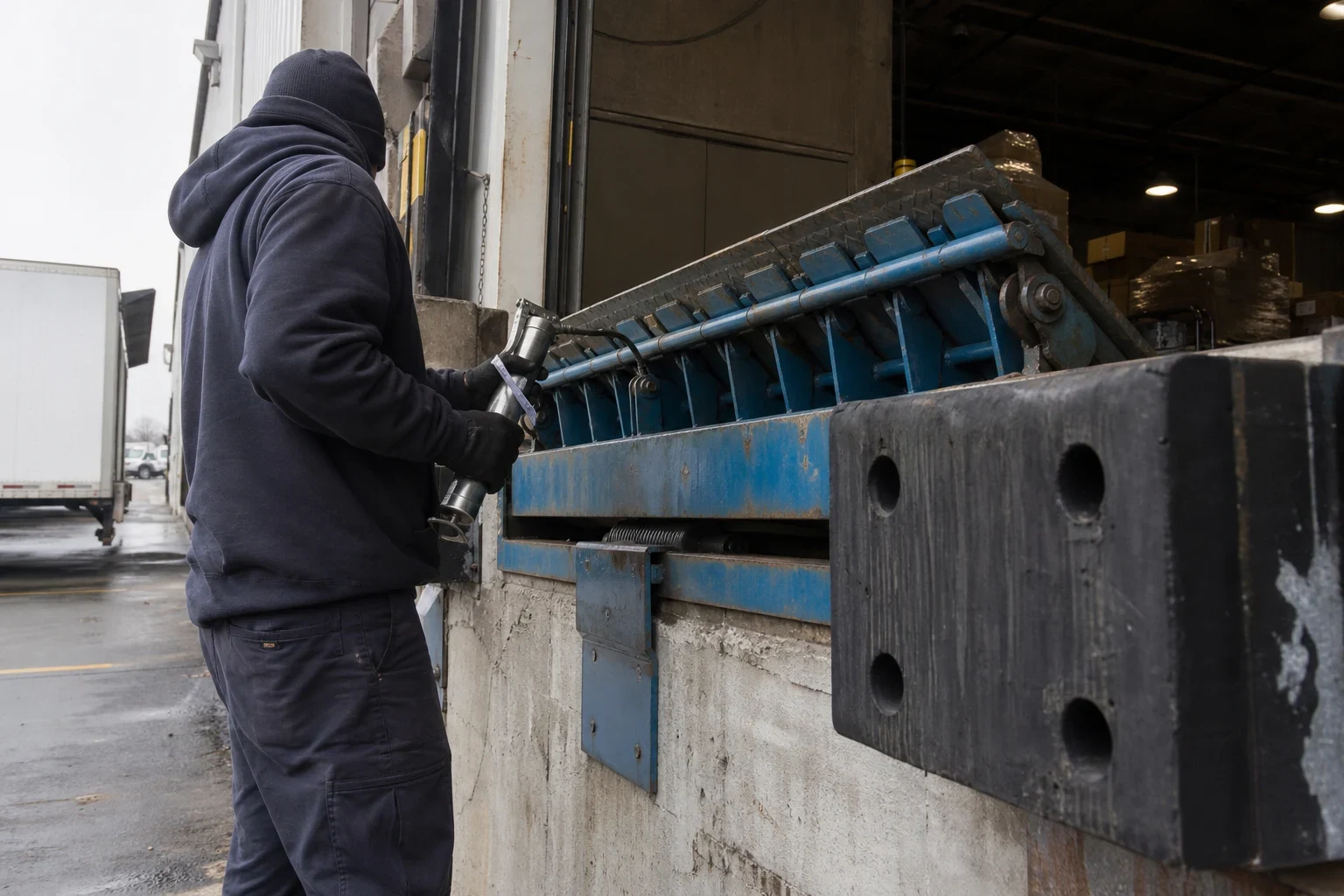
On hydraulic units we look at the oil itself, its level and its color, along with cylinder seals, hoses and the velocity fuse. Mechanical units get their springs and hold-down checked by hand. Hinge pins and the lip hinge are cleaned and greased, and we watch the lip extend and drop away cleanly before moving on.
Overhead door service
Springs, cables, drums, rollers and track alignment each get a close look. Tension is corrected where it has slipped, moving parts are lubricated, and bottom seals and weatherstripping are checked for gaps that let in cold air and debris.
Vehicle restraint checks
We cycle the hook or barrier through a full engagement and inspect its drive mechanism. Then we verify that the signal the driver sees and the signal your dock crew sees both agree with where the restraint really sits. A restraint that holds a trailer but gives the wrong signal is still a safety risk.
Seals, shelters and bumpers
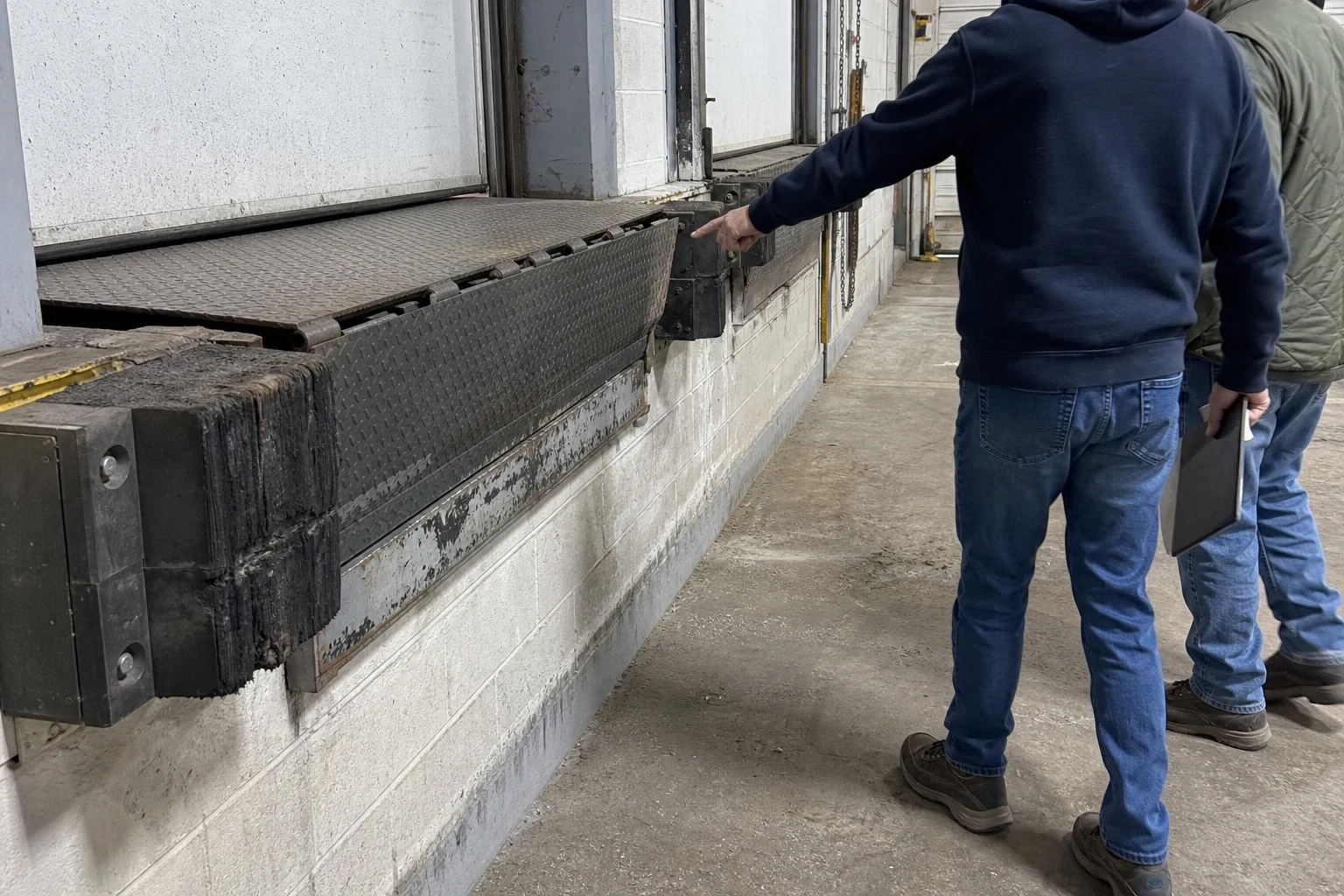
Torn seal pads and worn shelter curtains waste energy and let weather into the warehouse. Bumpers are measured for wear, because a worn bumper passes impact into the dock face and the leveler.
Safety devices
Toe guards, maintenance struts, stop buttons and safety edges are tested so the equipment protects the people working around it.
A written report
You receive a list of what we inspected, what we adjusted and what is wearing, with photos of anything that needs attention. Nothing beyond routine adjustment is repaired without your approval.
Signs your dock needs a maintenance visit
- The leveler drifts or bounces
- A deck that settles slowly under load or rises unevenly usually points to a hydraulic or spring issue. It tends to get worse quickly once it starts.
- Doors that grind, jerk or reverse
- Noisy travel, a door that stalls partway or one that reverses without reason often means worn rollers, spring tension loss or a misaligned track.
- Restraint lights out of step
- If the outside light shows green while the hook is not fully engaged, or drivers report confusing signals, the restraint needs attention before someone relies on it.
- Drafts and daylight around trailers
- Visible gaps at the seal or shelter mean heat loss in winter and moisture on the floor near the dock.
- No record of the last service
- If nobody on site can say when the equipment was last inspected, that alone is a good reason to start a schedule.
How a maintenance visit runs
- 1
A conversation by phone
You tell us how many doors you run, what equipment is at each and what your crews have noticed. We plan the visit around your receiving schedule.
- 2
One door at a time
We work position by position so the rest of the dock stays open. Each position is locked out while we work on it and handed back as soon as the checks are done.
- 3
Inspect, test, adjust
Every component on our list is checked under operation, not just looked at. Routine lubrication and adjustment are handled as we go.
- 4
Findings explained
Before we leave, we walk your manager through what we found, which items can wait and which should be scheduled soon, and why.
- 5
A schedule going forward
We suggest a visit interval based on your traffic and equipment age, so the next inspection is planned rather than prompted by a breakdown.
What shapes the cost of preventative maintenance
The price of a maintenance program depends on what is at your dock and how hard it works. We give you a clear quote by phone once we know your equipment, and any repair we find is quoted separately before we touch it.
- Number of positions
- Each dock position has its own leveler, door and often a restraint and seal. More positions mean more time on site.
- Equipment type and age
- Hydraulic levelers, mechanical levelers, high speed doors and powered restraints each have different checklists. Older equipment usually takes longer to inspect and adjust.
- Visit frequency
- High-traffic distribution centers may benefit from more frequent visits than a retail store with a few deliveries a day.
- Access and scheduling
- Working around live shipping or after hours affects how the visit is planned and staffed.
Preventative maintenance questions
- How often should loading dock equipment be serviced?
- Most facilities do well with two visits a year, often fall and spring. Busy warehouses running multiple shifts may need quarterly service. We recommend an interval after seeing your equipment and hearing how much it is used.
- Will the visit shut down our dock?
- No. We move through your positions in turn, so only the door we are working on is closed while the others keep receiving. If certain hours are your heaviest for deliveries, let us know on the phone and we will plan the visit so those doors stay free.
- Can you maintain equipment another company put in?
- Yes. Who installed it makes no difference to us; our checklists cover levelers, overhead doors, restraints and seals from many manufacturers. When a part is unique to one brand, we name it for you and explain how we would get it.
- What happens if you find something that needs repair?
- We show you what we found, explain the cause and give you a quote. Routine adjustments are part of the visit, but anything beyond that waits for your approval.
- Is it worth maintaining old equipment or should we replace it?
- Often a well-built leveler or door has years left once worn parts are addressed. When repair no longer makes sense, we will say so and can talk you through loading dock equipment installation as an option.
Start a maintenance schedule for your dock
Tell us what equipment you run and how busy your dock gets. We will suggest a sensible visit plan for your facility in Weatherly, Hazleton or the surrounding area.