ServicesVehicle Restraints
Vehicle Restraints in Weatherly
When a restraint won't catch the trailer or the lights stop agreeing, your dock slows down and your crew starts guessing. We find out why the restraint is misbehaving, repair or replace what is actually at fault, and leave the dock working the way it should.
How a restraint keeps the trailer in place
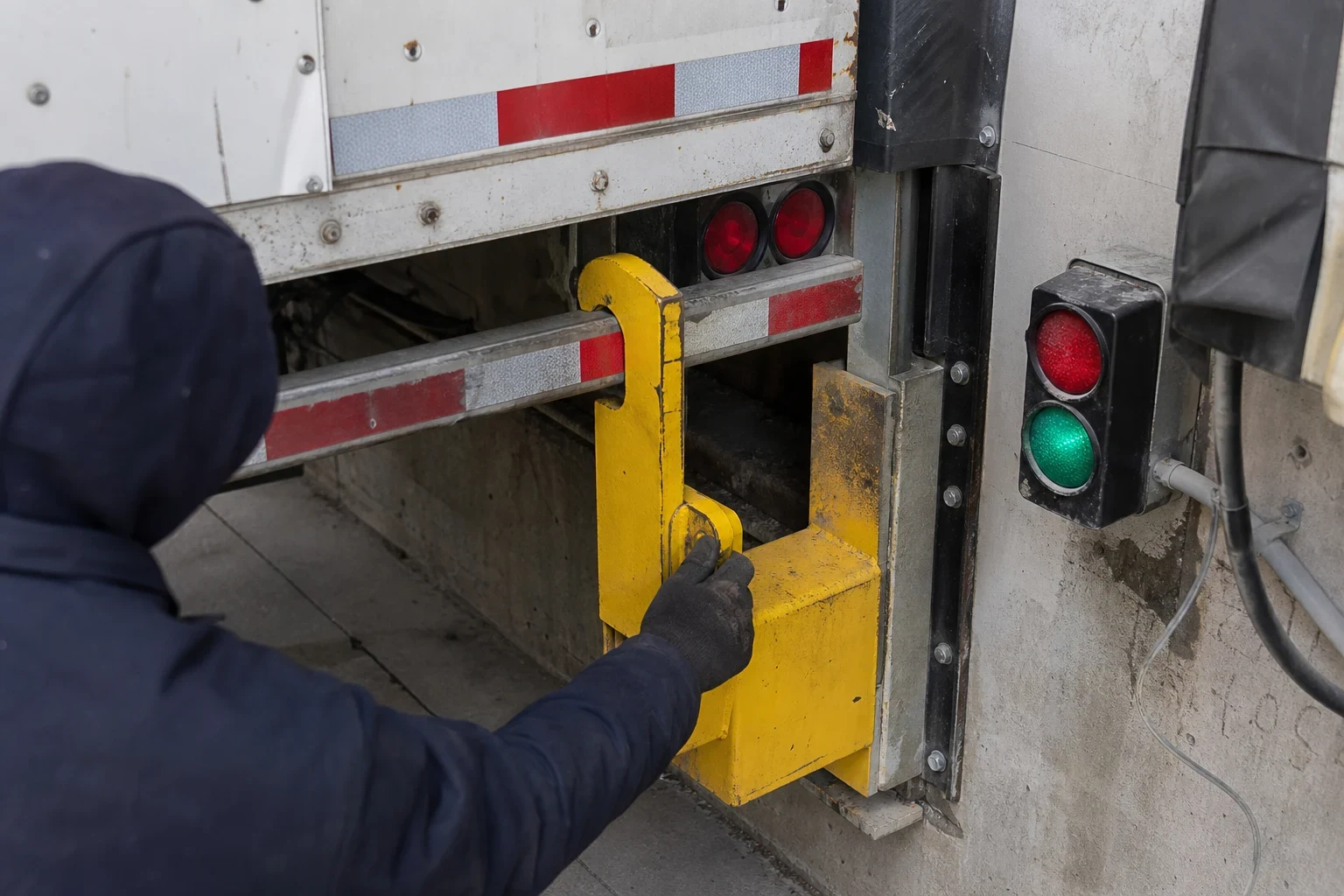
A vehicle restraint holds the trailer tight against the dock face so it cannot creep or pull away while a forklift crosses the dock leveler. The most common design uses a hook that climbs from a carriage on the dock wall and locks over the steel bar hanging below the back of the trailer bed. Wheel-based designs leave that bar alone and set a barrier in front of a rear tire. Both types usually pair with red and green signal lights inside and outside, so the driver and the dock crew share one clear signal about when it is safe to move.
Restraints live in a harsh spot at the bottom of the dock face, taking road spray, salt and impact from backing trailers. Problems rarely announce their real cause. A hook that won't rise can be a worn motor, a failed limit switch, a bent carriage or ice packed in the track. We test each of those before we recommend anything, so you pay for the repair the restraint needs and not the one that was easiest to guess.
What our restraint work covers
Hook and carriage repair
We inspect the hook, the carriage that rides up the dock face and the track it travels in. Bent guides, worn rollers and seized pivots are straightened, replaced or lubricated so the hook rises and seats cleanly.
Motor, hydraulic and spring drives
Powered restraints use an electric motor or a hydraulic unit; manual units rely on springs and a handle. We check drive output, fluid condition and spring tension and correct whichever one is falling short.
Lights, sensors and controls
Mismatched or dead communication lights are one of the most common complaints. We test the sensors, limit switches, wiring and control panel to find exactly where the signal drops out.
Interlocks with doors and levelers
Many facilities tie the restraint to the overhead door and the dock leveler so nothing operates out of sequence. We troubleshoot existing interlocks and can add them where they are missing.
Replacing a worn-out unit
Some restraints have rusted or worn past the point where fixing them is good value. In that case we help you pick a replacement that fits your trailer mix and door traffic, then mount, wire and test it. Our Loading Dock Equipment Sales and Loading Dock Equipment Installation pages explain that side further.
Signs your vehicle restraint needs service
The hook misses the bar
If the hook rises but fails to catch the rear impact guard on ordinary trailers, the carriage, sensor or hook geometry is usually out of adjustment.
Lights that disagree
A green light outside while the restraint is still stowed is a safety problem. So is a red light that stays on after release. Either one means drivers and dock staff are working from bad information.
Rough or hesitant travel
A hook that stalls halfway, grinds on the way up or moves in fits and starts usually has worn rollers, low hydraulic fluid, a weak motor or debris packed in the track.
Crews working around it
When your team starts using wheel chocks or manual overrides because the restraint is unreliable, it is time for a proper diagnosis before someone gets used to skipping it.
Visible damage at the dock face
Cracked mounting plates, loose anchors and rust-swollen housings come from trailer impacts and winter salt. Left alone, they let the whole unit shift out of alignment.
How a restraint service visit runs
- 1
We start with your description
On the phone we ask what the restraint is doing, which door it serves and when the problem started. That tells us what to bring and how to plan around your receiving schedule.
- 2
Testing at the dock
We cycle the restraint, read the controls and check the hook, carriage, drive and lights one by one. We show you what we found, with photos where it helps.
- 3
A clear recommendation
You get a straightforward answer on repair or replacement and a written estimate broken out by parts and labor before any work begins.
- 4
Repair and sign-off
We make the repair, then run the restraint through repeated engage and release cycles with the lights and any interlocks in play. The door goes back into service once it behaves correctly every time, and we clean up the work area before we leave.
What affects the cost of restraint work
Restraint repairs range from a sensor adjustment to a full carriage rebuild, so the price depends on what testing actually finds. We quote after we know the cause, and the estimate lists each part and the labor so you can see where the money goes.
- Type of restraint
- Manual hook units, powered hook units and wheel-based restraints differ in parts, complexity and labor time.
- Which component failed
- A limit switch or light is a small job. A motor, hydraulic pump or damaged carriage takes more parts and more hours.
- Condition of the dock face
- Crumbling concrete, broken anchors or a damaged pit edge may need repair before a restraint can be mounted securely.
- Interlocks and controls
- Adding or correcting interlocks with the overhead door and dock leveler means extra wiring and programming.
- Number of doors
- Servicing several doors in one visit usually spreads travel and setup time more efficiently than separate trips.
Vehicle restraint questions
Something not covered here? (570) 989-8869
Can you repair a restraint from any manufacturer?
We work on the common hook-style and wheel-based restraints found at warehouses and distribution centers. Tell us the make and model on the phone if you know it. If a part is no longer available, we will say so and talk through options.
Should we repair our old restraint or replace it?
It depends on the carriage, drive and mounting. If the structure is sound and parts are available, repair usually makes sense. If the track is worn, the housing is rusted through or the unit keeps failing in new places, replacement is often the better value, and we will explain why either way.
Some trailers have damaged or missing rear impact guards. What can we do?
Hook restraints depend on that bar, so trailers without a usable one are a real gap. A wheel-based restraint holds the trailer by its tires instead. We can look at your traffic and suggest whether that, or a combination, fits your dock.
How long will the door be out of service?
Many sensor, light and adjustment repairs are finished in a single visit. Motor, hydraulic or carriage work can take longer if parts must be ordered. We tell you what to expect before we start so you can route trucks to other doors.
Can a manual restraint be upgraded to a powered one?
Often, yes. We look at the dock face, the available power and how your crew works, then recommend a powered unit with lights and, if you want them, interlocks to the door and leveler.
Can restraint checks be part of regular maintenance?
Yes. Our Loading Dock Preventative Maintenance visits include cycling the restraint, testing lights and sensors and catching wear before winter salt and ice make it worse.
Get your restraint working right again
Tell us what the restraint is doing and which door it serves. We will plan a visit around your receiving schedule and find the real cause before recommending a repair.