ServicesEquipment Sales
Loading Dock Equipment Sales in Weatherly
We help warehouses, plants and receiving docks choose levelers, restraints and doors that fit the opening, the trailers and the loads you really move. We measure and ask questions first, so the equipment you buy is the right size and capacity from day one.
Buying the right equipment starts with the dock itself
Most poor equipment purchases come from a catalog spec chosen without looking at the dock. A leveler that is too short for your trailer height range leaves a steep grade that strains forklifts. A door rated for light use wears out early on a dock that cycles all day. We start with the actual conditions at your facility and work back to the product.
That means measuring the pit, the door opening and the dock height, noting the trailers you receive, and understanding your heaviest loads and busiest hours. If the real problem is an aging part that can be repaired, we will tell you that instead of selling something new.
When the equipment is chosen, our loading dock equipment installation service can put it in, so the person who measured is part of the job that follows.
What our equipment sales service covers
An on-site dock survey
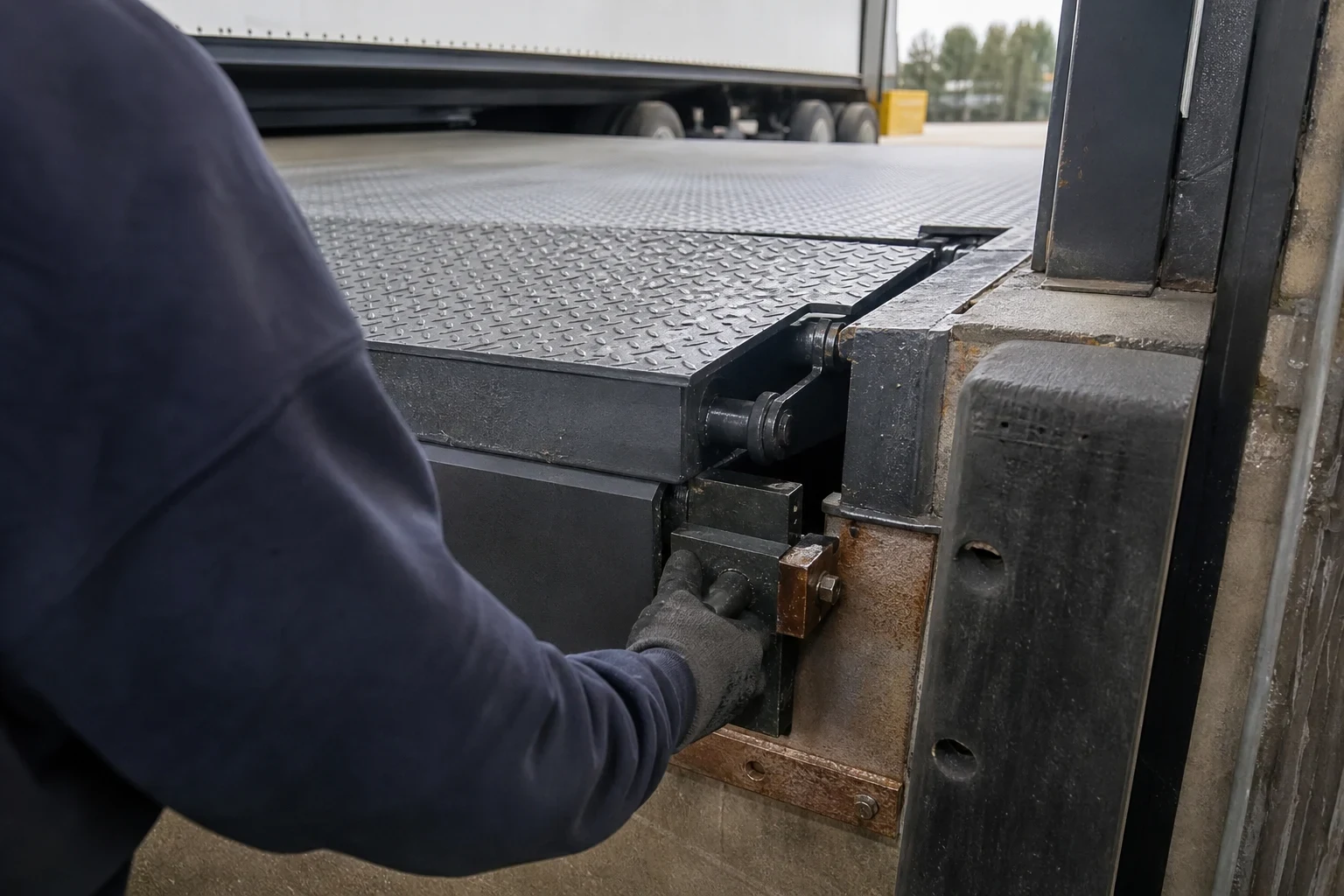
We measure dock height, pit dimensions, door openings and approach grade. We also look at the condition of the concrete and curb angles, since new equipment is only as sound as what it mounts to.
Equipment across the whole dock
We supply dock levelers, vehicle restraints, overhead doors, high speed doors and rolling grilles. Choosing them together keeps controls, interlocks and clearances working as one position rather than separate parts.
Capacity and duty matched to use
Leveler capacity is chosen from your actual forklift weight, load weight and traffic, not a round number. Doors are specified for the cycle count your shifts produce and the insulation your space needs through a Pennsylvania winter.
A written, line-item quote
Each piece of equipment, each accessory and any site work is listed on its own line. You can see what is required and what is optional before you decide.
Fit with what you already own
Many docks are upgraded one position at a time. We check that a new restraint or leveler works with your existing doors, pits and control panels, and we tell you plainly when it will not.
Signs it may be time for new dock equipment
Repairs keep coming back
When the same leveler or door needs service again and again, the cost of downtime can pass the cost of replacement. We look at the repair history with you before recommending either path.
Trailers no longer match the dock
A change in carriers or trailer types can leave a gap or a steep grade at the dock lip. Equipment sized for a different fleet may simply be the wrong length now.
Loads have gotten heavier
Newer forklifts and denser pallets can exceed what an older leveler was rated to carry. Running past rated capacity shortens its life and raises the safety risk.
No way to secure the trailer
Docks that rely on wheel chocks alone leave room for trailer creep and early departure. A vehicle restraint gives the driver and the forklift operator a clear signal.
Energy or security problems at the door
Drafty, damaged or slow overhead doors let heat out and let pests and weather in. An opening that needs to stay visible but locked may be better served by a rolling grille.
How a purchase comes together
- 1
A conversation by phone
You tell us what is happening at the dock and what you hope to change. We ask about trailer types, loads and traffic so the site visit is focused.
- 2
Measuring and observing on site
We visit your facility, measure each position and, when possible, watch a few loads cross the dock. This is where most of the real answers come from.
- 3
A clear recommendation
We explain which equipment fits, why, and where there is a choice between options such as hydraulic or mechanical levelers. You receive the quote in writing, line by line.
- 4
Equipment ordered, dates set
After you sign off on the quote, we place the equipment order and pick installation dates that suit your receiving hours. Positions are usually done one at a time, which keeps your other doors in use while we work.
What moves the price of dock equipment
Equipment pricing depends far more on your dock than on a list. Two positions that look alike can need very different products once we measure them. We explain each factor during the survey so the written quote holds no surprises.
- Size and capacity
- Longer levelers and higher load ratings cost more. We size to your real trailer range and forklift weights rather than defaulting to the largest option.
- Type of operation
- Hydraulic levelers, powered restraints and high speed doors carry a higher cost than manual or mechanical versions, and they also change how much effort and time each load takes.
- Condition of the pit and opening
- Cracked concrete, damaged curb angles or a pit that is out of square may need work before new equipment can be mounted correctly.
- Controls and interlocks
- Linking a restraint to the door and leveler, or adding lights and signals, adds parts and wiring. Many facilities find the safety gain worth it.
Questions about buying dock equipment
Something not covered here? (570) 989-8869
Do you only sell equipment, or do you install it too?
We do both. Our loading dock equipment installation service handles the work after purchase, and the same measurements we took during the survey guide the installation. You can also ask about loading dock preventative maintenance once the equipment is in service.
Can you replace just one leveler or door?
Yes. Many facilities upgrade one position at a time as budget allows. We check that the new piece works with your existing equipment and controls before we quote it.
How do you decide between repairing and replacing?
We look at the age of the equipment, the repair history, the condition of the structure and whether it still suits your loads. If a repair makes sense, we say so. The goal is the answer that holds up, not the bigger sale.
Do you serve facilities outside Weatherly?
We work with docks in Weatherly and around the area, including Hazleton, Freeland, Lehighton and Jim Thorpe. Tell us by phone where your facility is, and we will confirm.
How do I get a quote?
Get your quote by phone. We start with a short conversation, then visit to measure, and the written quote follows the site survey.
Start with an accurate picture of your dock
A short call lets us understand your trailers, loads and the trouble you are seeing. From there we can plan a visit and measure before recommending anything.