ServicesOverhead Doors
Overhead Doors for Loading Docks in Weatherly, PA
A door that stalls, drifts or drops hard is a symptom, and it rarely points straight at the cause. We find the failed part before replacing any spring or cable. Then we explain plainly what wore out and why, and leave you with a door that runs smoothly and seats tight.
Sectional and rolling steel doors, repaired at the source
Overhead doors at a loading dock cycle dozens of times a shift, take bumps from forklifts and pallet jacks, and sit in wind and freezing rain the rest of the time. Most failures show up as one symptom, like a door that won't close evenly. The cause behind it might be a worn torsion spring, a frayed cable, a bent track section, a damaged panel or an operator out of adjustment.
We service sectional steel and insulated doors, rolling steel doors and the operators that run them. Our first job on every visit is finding what actually failed. Replacing the part that looks worst often leaves the real problem in place, and the door is back down a few weeks later.
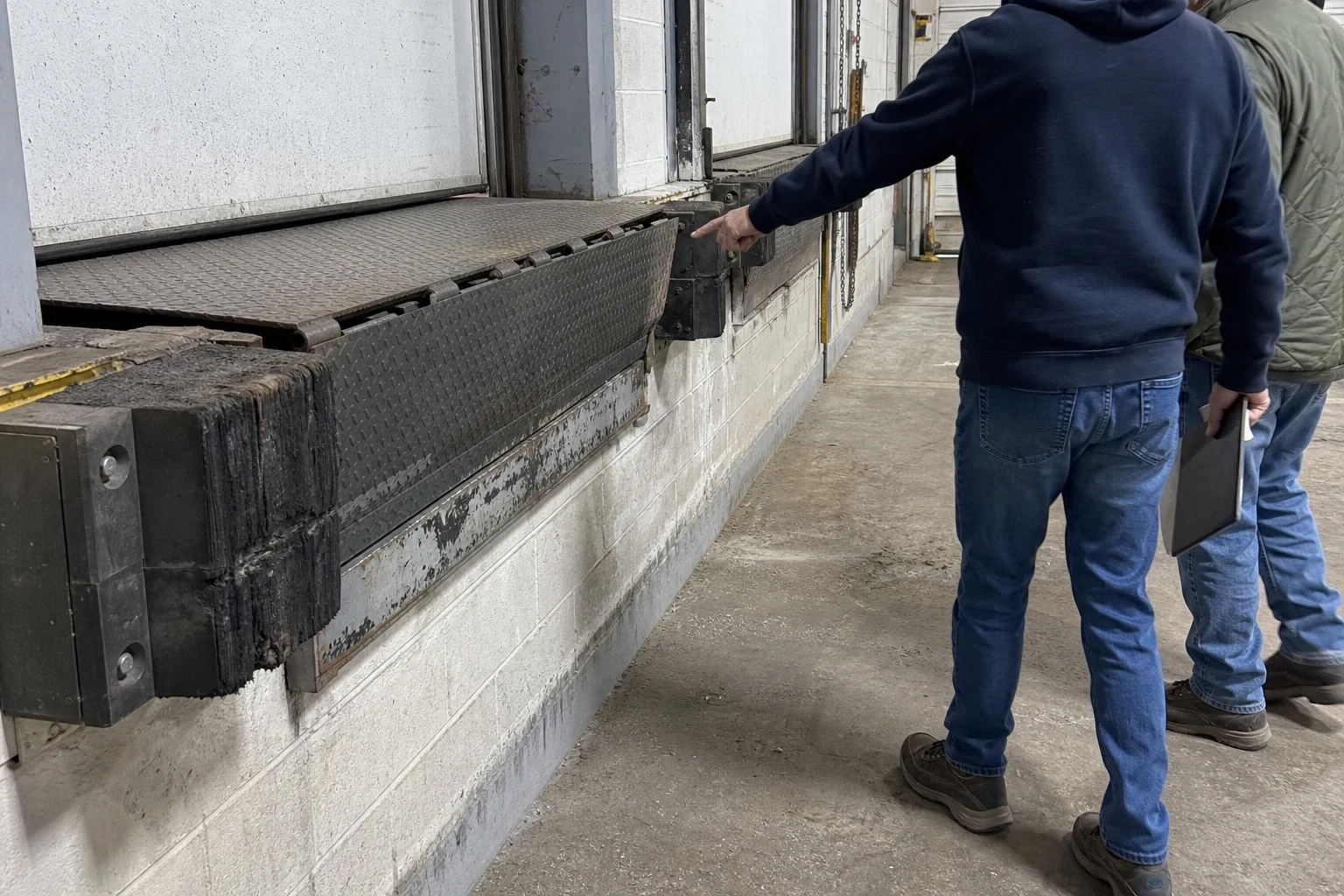
If the door shares an opening with a dock leveler or vehicle restraint, we check how they work together. A leveler lip or a dock seal that catches the bottom of the door can look a lot like a door problem.
What our overhead door work covers
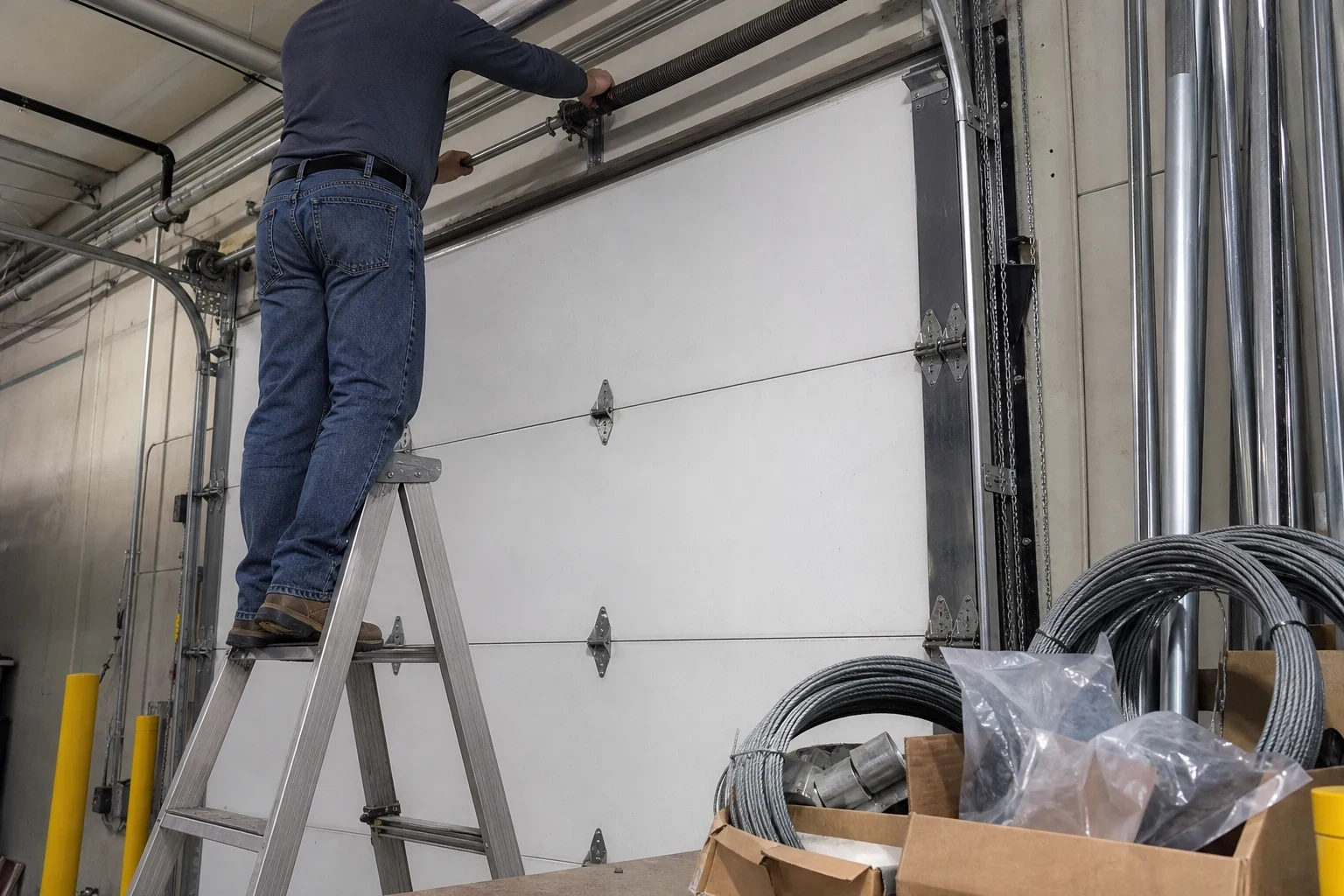
Spring and cable work
We measure and replace torsion and extension springs to match the door's actual weight. Cables and drums are replaced as a set when wear calls for it. Balanced springs take strain off the operator and make the door safer to work under.
Track, roller and hinge repair
Bent or out-of-plumb track, flat-spotted rollers and cracked hinges cause binding and noise. We straighten or replace track sections, swap rollers and hinges, and fasten everything back to solid jamb material.
Panel and section replacement
A section creased by a forklift can often be replaced on its own. We confirm the door model, steel gauge and insulation first so the new section fits, seals and finishes like the rest of the door.
Operator and safety device service
We check motor operators, limit and force settings, photo eyes and reversing edges, then adjust or replace what isn't working. A door that reverses reliably protects your crew and your freight.
Seals and weatherstripping
Bottom astragals, perimeter seals and header seals keep wind, snow and pests off the dock. Replacing a torn bottom seal is one of the simplest ways to cut heat loss at a busy door.
Signs your overhead door needs service
- Uneven closing or a gap at the floor
- If one side touches down first or daylight shows under the door, a cable, spring or track is usually out of position. Left alone, it puts uneven load on the whole door.
- Loud bangs, grinding or jerky travel
- A sharp bang often means a spring has broken. Grinding and stutter point to dry or failing rollers, worn bearings or a bent track.
- The operator strains or stops midway
- When the motor hums but the door barely moves, the springs may no longer carry the door's weight. Running it that way wears out an operator quickly.
- Damage after an impact
- Creased panels, a track pushed out of line or a loose hinge after forklift contact should be looked at before the door is cycled again.
- Drafts, ice or water at the threshold
- Torn seals and a door that no longer seats evenly let cold air and meltwater onto the dock floor. Through a Pennsylvania winter that means higher heating costs and a real slip hazard.
How an overhead door visit runs
- 1
A short call about the symptoms
We ask how the door misbehaves, roughly how many cycles it sees a day and when it first acted up. With that, we load the parts most likely needed and pick a time that stays clear of your receiving window.
- 2
Diagnose before repairing
On site, we secure the door and inspect springs, cables, track, panels, operator and safety devices. We show you what we found and photograph the worn or damaged parts.
- 3
A clear repair plan
You get a line-item estimate that separates what needs fixing now from what can wait. If repair no longer makes sense for an older door, we say so plainly and explain the replacement options.
- 4
Repair, test and clean up
We complete the work with the opening blocked off, then balance and adjust the door. We test full travel, limits and safety reversing, haul away old parts and leave the dock clear for your crew.
What affects the cost of overhead door repair
Every door and every failure is a little different, so we price after we've seen it. Your estimate lists parts and labor separately, and we walk through each line before work starts. These are the things that move the number most.
- Door size and type
- A larger or heavier door needs heavier springs, longer cables and more labor to balance. Insulated sectional doors and rolling steel doors use different parts and procedures.
- Which parts failed
- A single broken spring is a different job from a spring, both cables and a bent track. Paired parts are often best replaced together, and we'll tell you when that's true and when it isn't.
- Parts availability
- Common sizes are easy to source. Discontinued panels or older operator parts can take longer to find, and sometimes they tip the decision toward a new door.
- Access and scheduling
- High headroom, obstructed tracks or work that has to happen during off hours can add labor time. We plan the visit around your dock schedule to keep downtime short.
Overhead door questions
- Can you repair one damaged panel instead of replacing the whole door?
- Often, yes. If we can identify the manufacturer and model and a matching section is available, we replace only the damaged one. If panels are discontinued or the damage has spread into neighboring sections and track, we'll show you why a full door may be the better use of your budget.
- A spring snapped. Can we keep running the door until you get here?
- We'd advise against it. With no spring balance, the operator ends up lifting the entire weight of the door, which can burn out the motor or break a cable. If the opening has to stay secure, leave the door closed and keep people out from under it until the repair is done.
- Do you work on the motor operator too, or just the door?
- Both. We adjust limits and force settings, replace photo eyes and reversing edges, and repair or replace operators. An operator fault and a spring problem can look alike, so we check both before recommending anything.
- How do you keep our dock running while you work?
- We ask about your receiving and shipping times when you call and schedule around them where we can. At a facility with several doors, we work on one opening at a time so the others stay in use.
- Should we pair door repairs with routine maintenance?
- If you have several doors with similar wear, our loading dock preventative maintenance visits catch frayed cables, tired springs and dry rollers before they stop a door. You also get a running record of each door's condition, which helps with budgeting and safety compliance.
Bring a stuck or noisy door back into service
Give us a quick picture of the symptoms by phone and we'll outline the likely causes and a visit time that fits your shipping day. Nothing gets replaced until we've confirmed the cause on site.